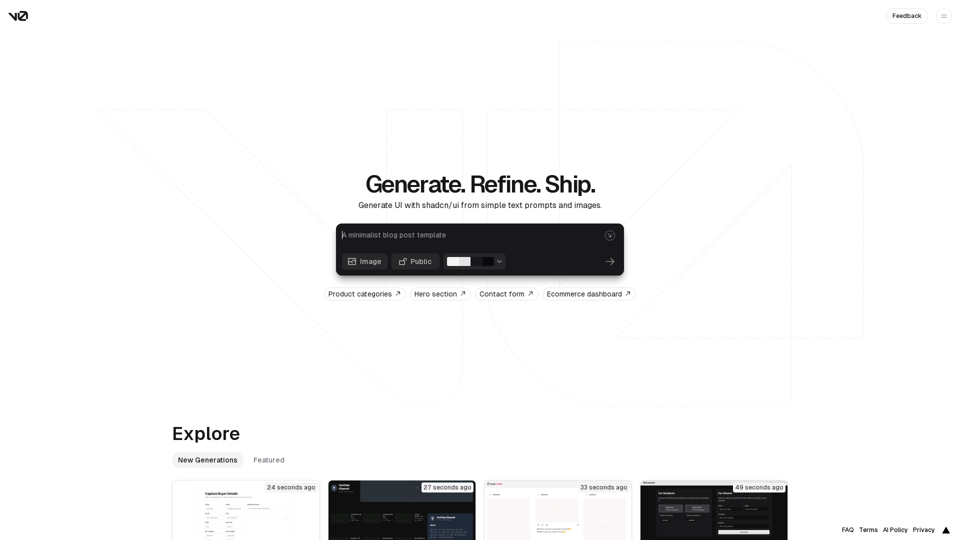
Learn, improve and generate code with AI
Refactor code, generate documentation, create unit tests and more. Simply paste a block of code, choose your language or framework, then hit "Generate" to witness magic.
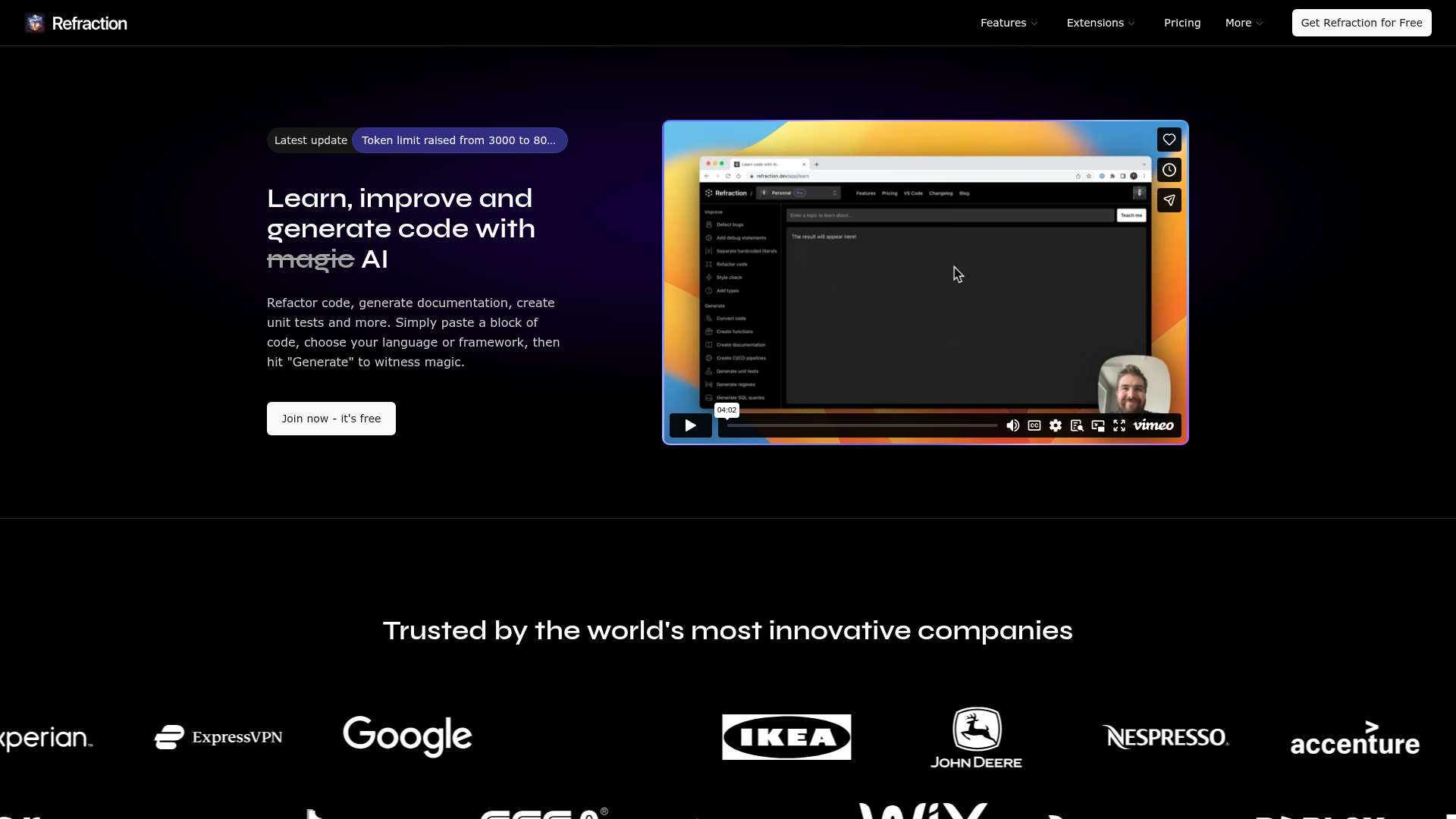
What is Refraction.dev?
Refraction.dev is an advanced AI-powered code generation platform built for professional developers and engineering teams. It acts as an intelligent programming assistant, automating critical but often tedious aspects of the software development lifecycle. By leveraging cutting-edge AI models, Refraction enables users to automatically generate unit tests, create comprehensive documentation, refactor and optimize existing code, and much more. The platform supports a staggering 56 programming languages, making it a versatile tool for a global developer community across diverse tech stacks and industries.
What are the Key Features of Refraction.dev?
The core power of Refraction.dev lies in its comprehensive suite of AI-driven features designed to boost developer productivity:
- Multi-Language AI Code Generation
- Generate functional code, boilerplate, or entire snippets across 56 languages, from mainstream ones like Python, JavaScript, and Java to enterprise and legacy languages like ABAP, COBOL, and Fortran.
- Automated Unit Test Creation
- Drastically reduce the time spent on writing tests. The AI analyzes your code and generates corresponding unit test cases to ensure robustness and reliability.
- Intelligent Code Refactoring
- Improve code quality, performance, and maintainability. Refraction can suggest and implement refactors to clean up technical debt, optimize algorithms, and adhere to best practices.
- Instant Documentation Generation
- Automatically create clear, concise documentation for functions, classes, and modules, keeping your codebase well-documented with minimal effort.
- Developer-First Design
- The platform integrates seamlessly into developer workflows, offering tools that feel native and are built to handle real-world, complex codebases trusted by major companies.
- High-Volume Code Production
- The platform has already proven its scale, having generated over 2.9 million lines of code for its growing user base of more than 13.7 thousand developers.
How to Use Refraction.dev?
Getting started with Refraction.dev is straightforward and designed for developers:
- Sign Up for Free: Visit the Refraction website and join using your preferred method. The platform offers a free tier to start exploring its capabilities.
- Integrate or Upload Code: Connect Refraction to your development environment or directly upload code snippets/files to the platform's interface.
- Select Your Task: Choose the AI action you need, such as "Generate Tests," "Write Documentation," "Refactor Code," or "Generate Code in [Specific Language]."
- Configure and Generate: Provide any necessary context or specifications for the AI. Refraction will then process your request and generate the output code or documentation.
- Review and Implement: The AI provides suggestions and generated code. The developer reviews, edits if needed, and integrates the high-quality output directly into their project.
What is the Price of Refraction.dev?
Refraction.dev operates on a freemium model, making powerful AI tools accessible while offering advanced capabilities for professional teams:
- Free Plan
- Ideal for individual developers and those wanting to try the platform. It includes a generous number of free code generations to explore core features like test and documentation generation.
- Pro / Paid Plans
- For developers and teams who rely heavily on AI-assisted coding, subscription plans are available. These plans offer significantly higher generation limits, access to more advanced AI models for complex tasks, priority support, and features tailored for team collaboration and enterprise-scale projects. Detailed pricing is available on the Refraction.dev pricing page.
Helpful Tips for Using Refraction.dev
To maximize your efficiency with this AI coding assistant, consider these tips:
- Start with Clear Context
- When requesting code generation or refactoring, provide as much clear context as possible. Well-defined function signatures, comments about intent, and examples lead to better AI outputs.
- Use for Boilerplate and Repetitive Tasks
- It excels at generating standard code structures, CRUD operations, configuration files, and test suites—freeing you to focus on complex business logic.
- Iterate on the Output
- Treat the AI's suggestion as a first draft. Always review, test, and refine the generated code to ensure it perfectly fits your architecture and standards.
- Leverage it for Learning
- Use the tool to generate examples in unfamiliar programming languages or to see different approaches to solving a problem, accelerating your learning curve.
- Combine Features
- Use documentation generation after writing a function, or generate tests immediately after refactoring to maintain a high-quality, well-tested codebase efficiently.
Frequently Asked Questions
What programming languages does Refraction support?
Refraction.dev supports an extensive list of 56 languages, including but not limited to Python, JavaScript, Java, C#, C++, Go, Ruby, PHP, TypeScript, Swift, Kotlin, Rust, SQL, and even niche languages like ABAP, COBOL, and Pascal.
Is the code generated by Refraction.dev's AI reliable for production use?
The AI generates high-quality code based on best practices and patterns from its training. However, like any generated code, it is crucial for a developer to review, understand, and test it thoroughly before deploying it to a production environment.
How does Refraction ensure the privacy and security of my code?
Refraction is trusted by major global companies, indicating a strong commitment to security. The platform likely employs industry-standard practices such as encryption in transit and at rest. For specific details on data handling and security policies, you should refer to Refraction.dev's official privacy and security documentation.
Can I use Refraction.dev within my IDE?
While the provided information highlights the web platform, many modern AI coding tools offer IDE integrations (e.g., VS Code extensions). Check Refraction.dev's features or documentation pages for information on available integrations.
What's the difference between Refraction and general-purpose AI chatbots like ChatGPT for coding?
Refraction is specialized for software development tasks. It is finely tuned for operations like test generation, refactoring, and documentation within a developer's workflow, often providing more structured, context-aware, and directly implementable outputs for these specific tasks compared to a general-purpose AI.
Learn, improve and generate code with AI
Refactor code, generate documentation, create unit tests and more. Simply paste a block of code, choose your language or framework, then hit "Generate" to witness magic.
 Cloudflare
 Google Analytics
 Google Font API
 Google Hosted Libraries
 HTTP/3
 cdnjs
cdnjs jQuery:3.5.1
Free AI anime and manga generator. Turn text into anime episodes, manga, comics, webtoons and comic shorts in any art style — no drawing or animation skills needed.
Translate image text across 70+ languages with our advanced AI Image Translator to help you better expand your products globally to various countries
Advertised Here
Reach thousands of visitors daily. Get your spot now!
Tools similar to Learn, improve and generate code with AI
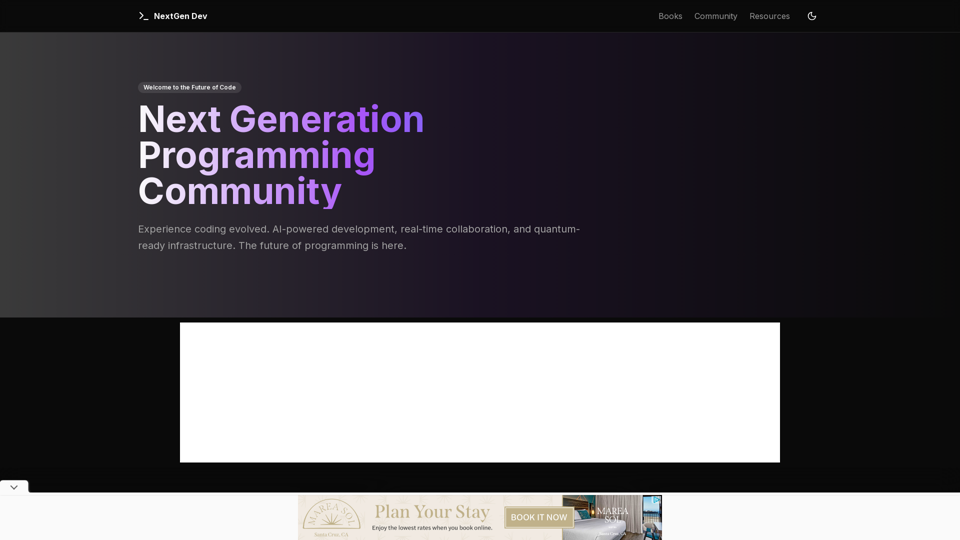
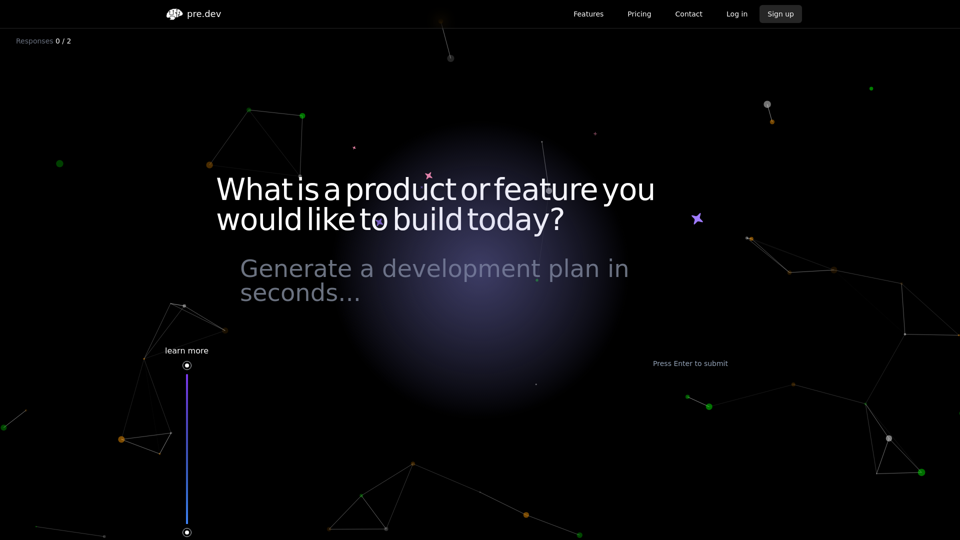
Experience coding evolved with AI-powered development, real-time collaboration, and quantum-ready infrastructure. Join our global community of developers.
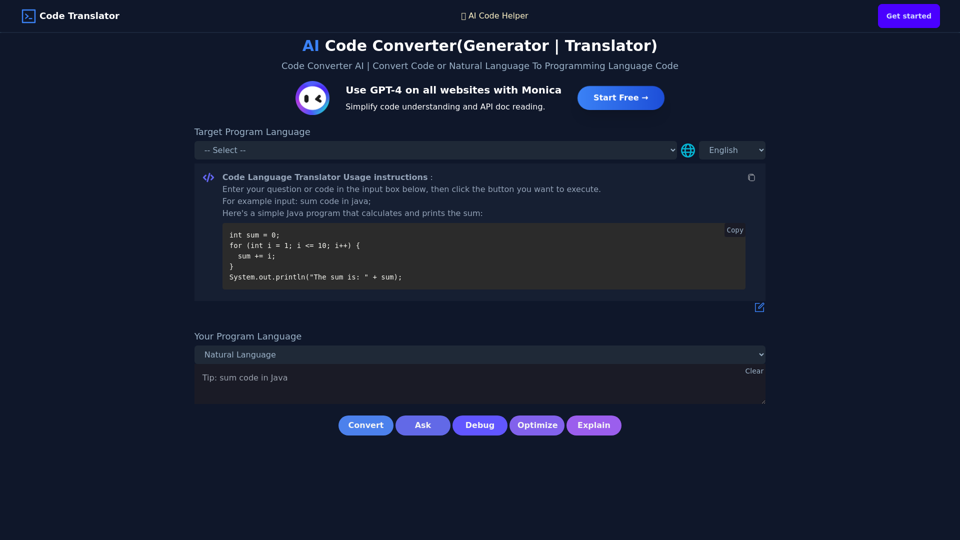
Use AI To Convert Code Or Generate Code From One Language To Another. AI Code Translator. Translate Code From Any Language To Another With A Click.
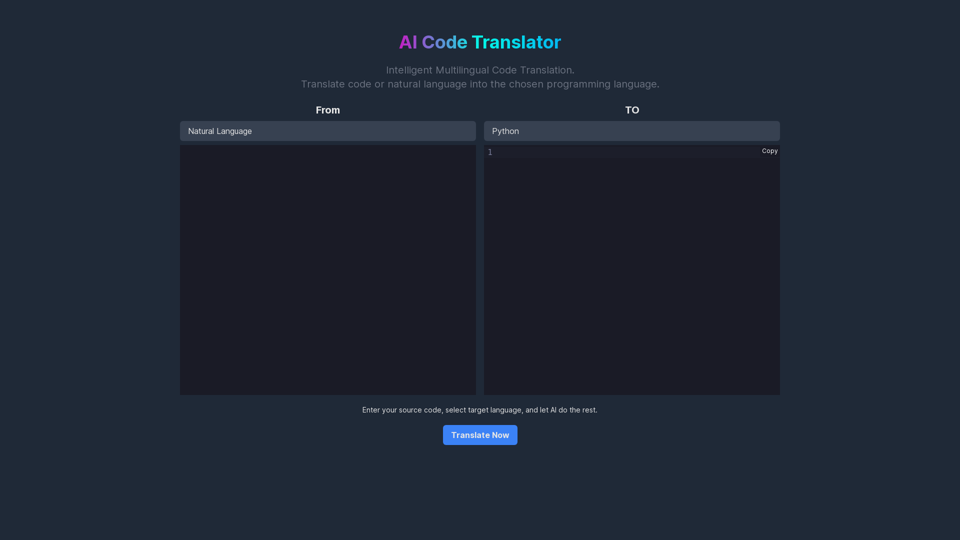
AI Code Translator leverages state-of-the-art artificial intelligence technology to provide seamless conversion of code across multiple programming languages. Enhance your development process with smart translation.by code llama or chatgpt.
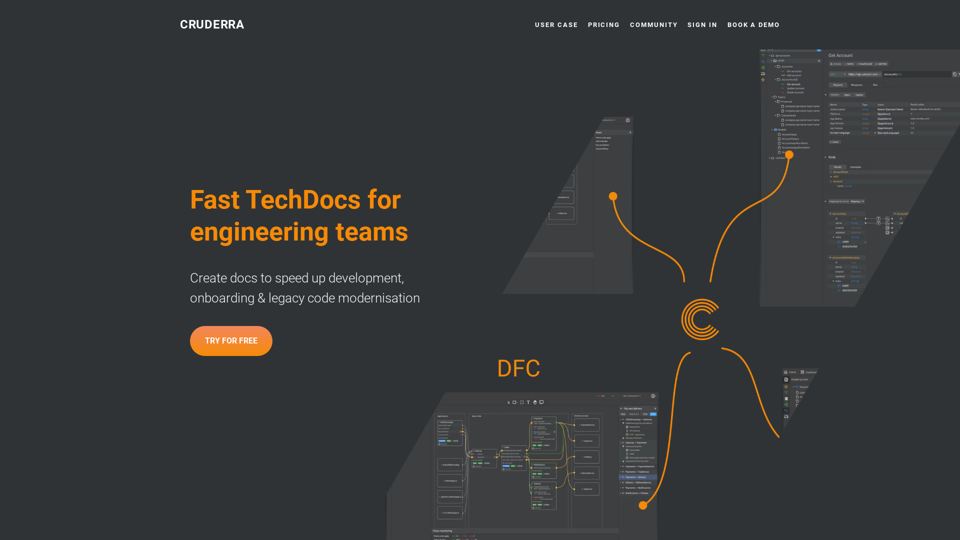
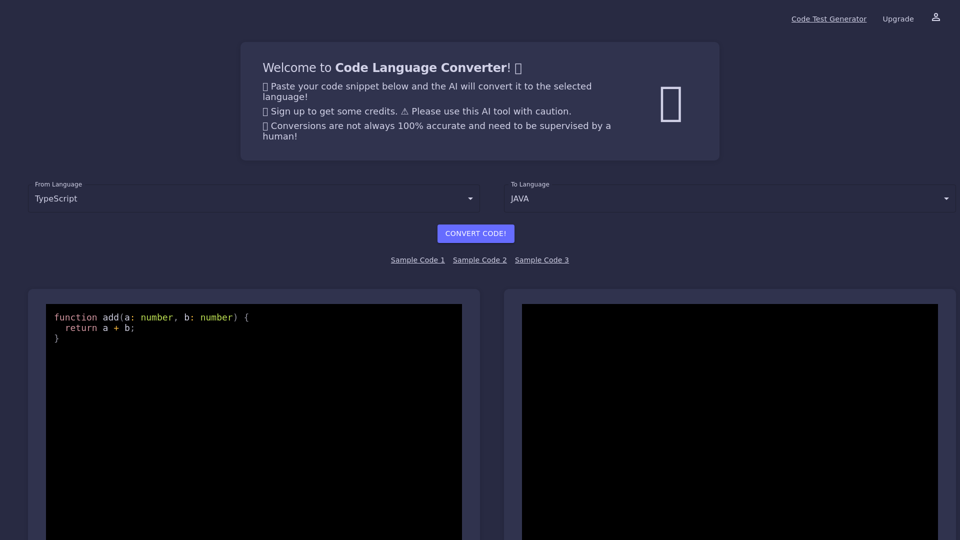
Code Language Converter online uses artificial intelligence to quickly convert your code snippets from one programing language to another in a matter of seconds.