What is AI Content Detection: How Tools Analyze Your Writing?
AI Content Detection: How Tools Analyze Your Writing is a guide published on gptminus1.com that explains how automated detectors estimate whether a piece of text was written by a human or generated by an AI. It covers the signals detectors rely on, why the same passage can score differently across tools, and where human and machine writing patterns overlap. It is written for students, journalists, marketers, editors and anyone whose writing is submitted to a platform that runs detection.
Key features
- Perplexity explained
- The guide describes perplexity as a measure of how predictable each word choice is given the words before it, and notes that AI text often produces lower perplexity scores.
- Burstiness explained
- It covers burstiness, the variation in sentence length, and explains that AI text tends to keep sentences at similar lengths while human writing mixes short and long ones.
- Stylometric signals
- It describes how some tools examine structural habits, punctuation patterns and rhythmic consistency across paragraphs as statistical fingerprints.
- False positive and false negative analysis
- The guide explains why non-native English speakers, technical writers and legal documents are sometimes flagged as AI, and why paraphrased or edited AI text often passes undetected.
- Cross-tool comparison
- It explains that different tools use different training datasets and scoring thresholds, so a passage scored 85% AI by one platform may score 40% on another.
- Coverage of authentication methods
- It outlines watermarking such as Google's SynthID, cryptographic signing, C2PA provenance metadata and Adobe's Content Credentials as alternatives to detection scores.
- Limits of detection
- The guide states that no current tool can confirm with certainty who wrote a text, and that scores shift with text length, subject matter, writing style and the amount of editing.
How to use AI Content Detection: How Tools Analyze Your Writing
- Read the section on what detectors analyze to understand the two core signals, perplexity and burstiness, before interpreting any score.
- Check the length of the text being scored, since samples under roughly 300 words give detectors too little material to establish a reliable pattern.
- Consider the writer's style and genre, because technical writing, legal documents, academic abstracts and simplified instructional prose share traits detectors associate with AI output.
- Ask whether the text was paraphrased or manually rewritten, since editing makes the statistical patterns detectors rely on less consistent.
- Treat the score as one limited signal rather than a verdict, and cross-reference it with metadata, submission history, stylometric patterns and contextual evidence.
Use cases
- Students and applicants who need to understand why a submission may be flagged as AI-generated despite being written by hand.
- Journalists and editors assessing whether a detection score is strong enough evidence to act on.
- Marketers and content teams checking how AI-assisted drafts are likely to be scored before publishing.
- Non-native English speakers whose structured, repetitive writing style is commonly misread as machine-generated.
- Researchers and compliance teams comparing detection against provenance approaches such as watermarking and C2PA metadata.
Pricing
The official website does not list pricing for AI Content Detection: How Tools Analyze Your Writing; check the site directly for any current information.
FAQ
What signals does AI Content Detection: How Tools Analyze Your Writing say detectors use?
The guide names perplexity, which measures how predictable each word choice is, and burstiness, which measures variation in sentence length. It also notes that some tools examine stylometric features such as punctuation patterns and rhythmic consistency.
Why do two AI content detection tools give different scores for the same text?
Because tools are trained on different datasets and apply different scoring thresholds, and there is no universal standard. A passage flagged as 85% AI-generated by one platform might score 40% on another.
Can AI Content Detection: How Tools Analyze Your Writing prove that a text was written by AI?
No. The guide states that every detection score is an estimate and that no current tool can confirm with certainty whether text was written by a human or generated by an AI. A score of 72% means the tool found patterns consistent with AI writing at that probability, not that AI wrote it.
Why does AI content detection flag human writing as AI-generated?
Non-native English speakers often write in structured, repetitive patterns that resemble AI output, and the same applies to technical writing, legal documents and simplified instructional prose. The guide gives the example of a methodical lab report scoring 80% AI-generated despite being written entirely by the student.
How does AI content detection handle AI text that has been edited?
Edited or paraphrased AI output is harder to catch, because rewriting makes the statistical patterns detectors rely on less consistent. Short samples under about 300 words also reduce accuracy.
What alternatives to AI content detection does the guide describe?
It describes authentication methods that verify where content came from rather than inferring authorship, including watermarking such as Google's SynthID, cryptographic signing, C2PA provenance metadata and Adobe's Content Credentials. The guide notes that each method has gaps, since watermarks can be stripped and metadata can be spoofed.
GPT
Fool GPT by randomly replacing words with synonyms in your text.
Free AI anime and manga generator. Turn text into anime episodes, manga, comics, webtoons and comic shorts in any art style — no drawing or animation skills needed.
Translate image text across 70+ languages with our advanced AI Image Translator to help you better expand your products globally to various countries
Advertised Here
Reach thousands of visitors daily. Get your spot now!
Tools similar to GPT
Use our free AI content detector to analyze your content without any limitations, helping you refine and perfect it before sharing with your audience.
AI Text Scanner and Multi-Model AI Detector, intuitive with Superior Accuracy. Free AI Detector & Plagiarism Checker for AI Content by SmartAI.
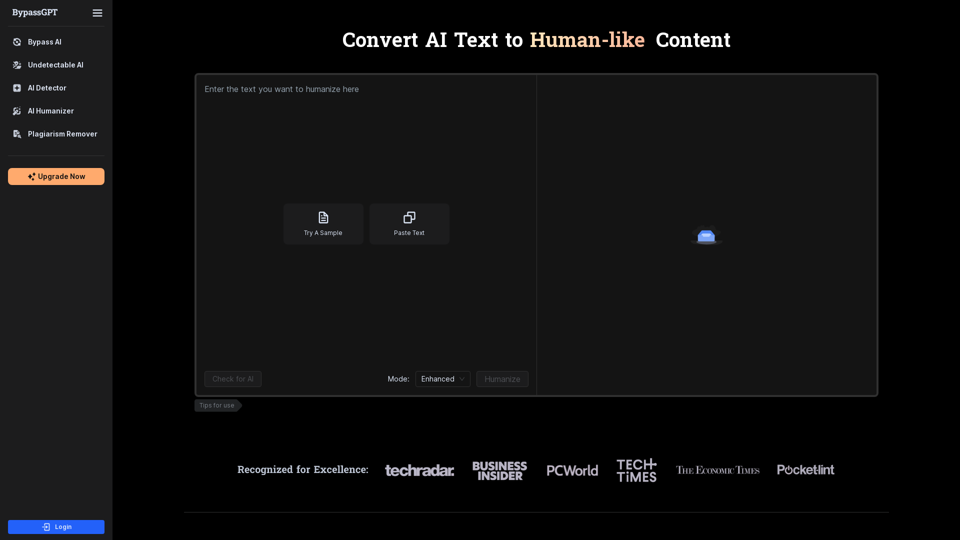
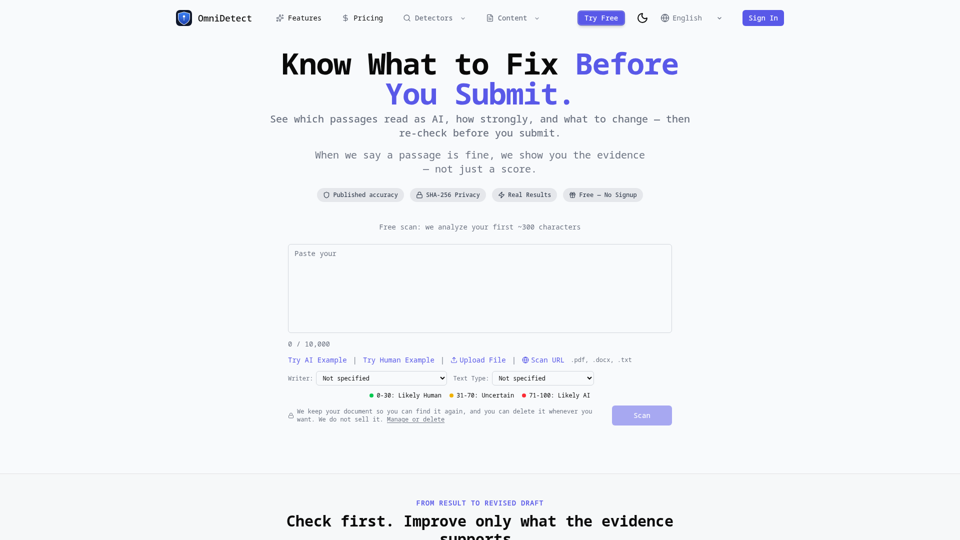
Know what to fix before you submit. See which passages read as AI, how strongly, and what to change — then re-check. We publish our measured accuracy, misses included.
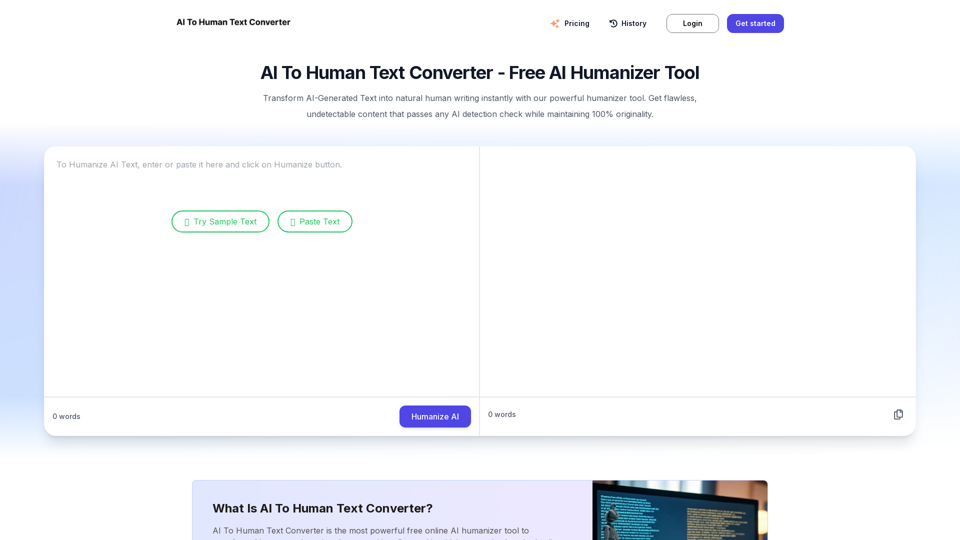
AI To Human Text Converter helps to convert AI generated text into natural, human-like writing that bypasses AI detection. Free tool for undetectable content.
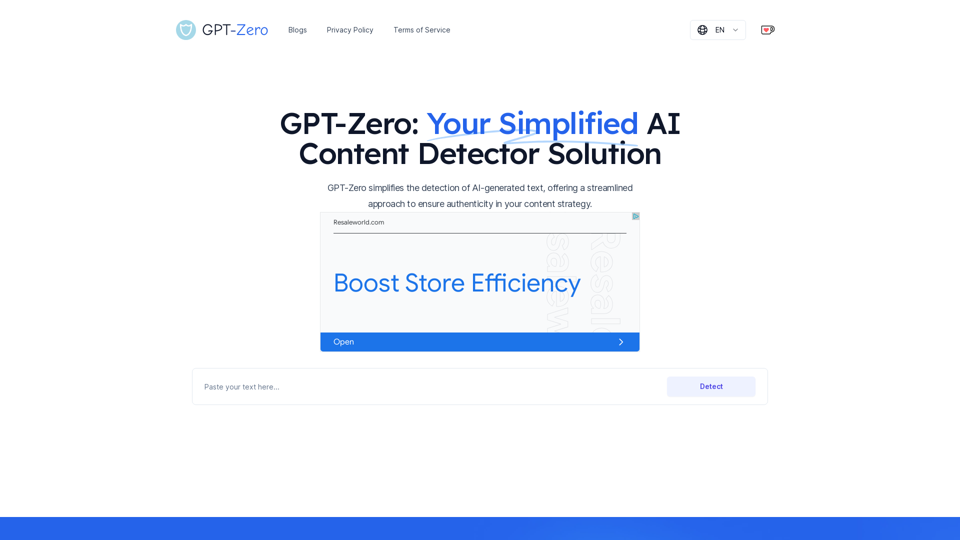
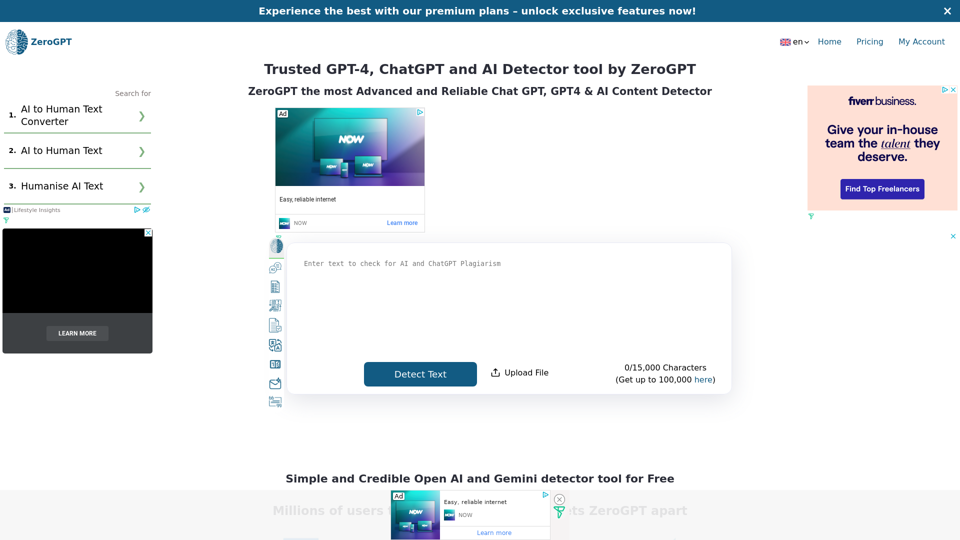
AI Content Detector and ChatGPT Detector, simple way with High Accuracy. AI Checker & AI Detector Free for AI GPT Plagiarism by ZeroGPT.