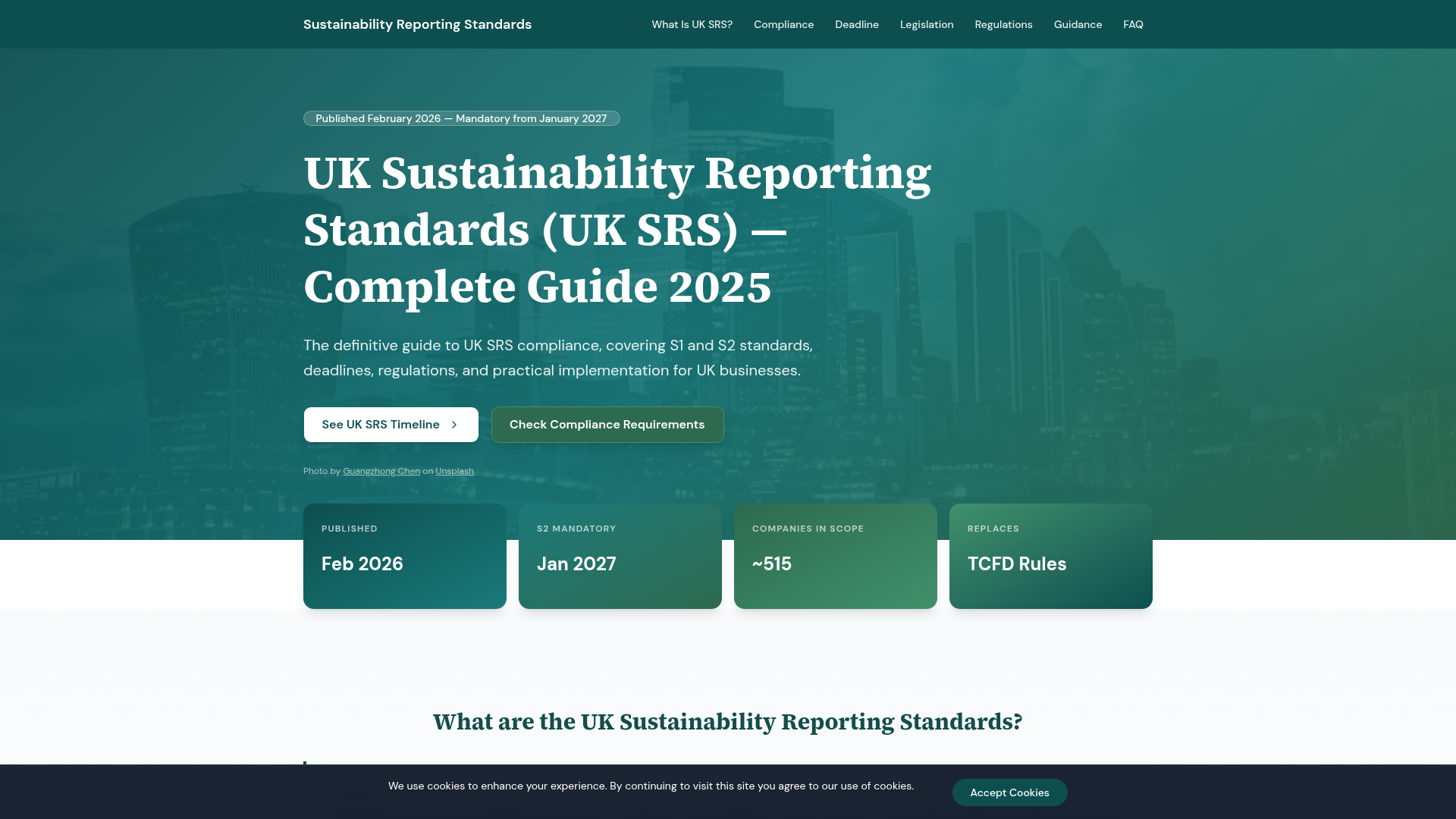
What are the UK Sustainability Reporting Standards (UK SRS)?
The UK Sustainability Reporting Standards (UK SRS) are the UK's national, mandatory framework for corporate sustainability disclosures. Published by the Financial Reporting Council (FRC) in February 2026, they are based on the global IFRS S1 and S2 standards but include specific UK modifications. This framework legally requires large UK-listed companies and certain public interest entities to report detailed, sustainability-related financial information. This encompasses governance structures, strategic approaches to sustainability risks and opportunities, risk management processes, and specific metrics and targets—particularly around climate. Mandatory compliance for the largest in-scope companies begins for financial years starting on or after 1 January 2027. The UK SRS represents a fundamental shift from voluntary guidance (like the TCFD recommendations) to a regulated disclosure regime integrated into UK company law and listing rules, aiming to provide investors and stakeholders with consistent, comparable, and reliable sustainability data.
What is the Main Feature of the UK SRS Framework?
The UK SRS framework is defined by several core features that distinguish it from previous voluntary schemes.
1. Mandatory, Legally-Backed Disclosures: Unlike past frameworks, UK SRS creates legally binding reporting obligations. Compliance is enforced through the Financial Conduct Authority (FCA) listing rules and is integrated into the UK's corporate reporting ecosystem, giving the disclosures equivalent standing to financial reports.
2. Two-Standard, Phased Implementation: The framework consists of two primary standards: UK SRS S1 (General Requirements) and UK SRS S2 (Climate-related Disclosures). Implementation is strategically phased: S2 becomes mandatory from January 2027, while S1 transitions to a "comply-or-explain" basis from January 2029. This acknowledges the relative maturity of climate data versus broader sustainability metrics.
3. UK-Specific Modifications and Carve-Outs: While aligned with the global IFRS baseline, UK SRS includes pragmatic UK-specific amendments. A key example is a temporary carve-out allowing companies to exclude Scope 3 greenhouse gas emissions in their first year of mandatory S2 reporting, recognizing initial data collection challenges.
4. Comprehensive Four-Pillar Structure: Both standards are built around the four core pillars of governance, strategy, risk management, and metrics & targets. This requires companies to disclose not just data points, but how sustainability is embedded in leadership, planning, and operational resilience.
5. Broader Materiality Focus: UK SRS S1 significantly expands the scope beyond climate. It mandates disclosures on all material sustainability topics—including biodiversity, water security, social factors, and supply chain impacts—that could reasonably affect the company's enterprise value.
How to Prepare for and Implement UK SRS Compliance?
Successfully navigating UK SRS requires a structured, proactive approach well ahead of the 2027 deadline.
1. Conduct a Gap Analysis: Immediately benchmark your current sustainability disclosures and management practices against the detailed requirements of UK SRS S1 and S2. Identify critical gaps in data, governance, and internal controls.
2. Establish Robust Governance: Formalize board-level oversight and accountability. This includes setting up (or empowering) a board sustainability committee, defining clear roles across finance, risk, legal, and operational teams, and integrating sustainability oversight into existing audit committee remits.
3. Execute a Double Materiality Assessment: Undertake a thorough process to identify sustainability topics that are material from both impact (affecting society/environment) and financial (affecting enterprise value) perspectives. Engage with key stakeholders to inform this assessment.
4. Build Data Collection Systems: Implement robust processes and controls for gathering required metrics. This is most critical for Scope 1, 2, and eventually Scope 3 emissions data, but also extends to other environmental and social KPIs. Consider technology solutions for data aggregation and audit trails.
5. Develop Disclosure Content: Draft the narratives and quantitative disclosures required under the four pillars. Connect sustainability-related risks and opportunities directly to financial statements and business model resilience. Prepare both for inclusion in the annual report and for any standalone sustainability reporting.
6. Plan for External Assurance: Anticipate the need for limited assurance over sustainability disclosures. Engage with assurance providers early, preferably those on the FRC's register, to scope the engagement and align on timelines with your financial audit cycle.
What is the Cost and Resource Implication of UK SRS?
The cost of UK SRS compliance varies significantly based on company size, sector complexity, and existing sustainability maturity. For companies starting from scratch, initial setup costs can be substantial.
Direct Costs: These include fees for external consultants (for gap analysis, materiality assessment, and process design), assurance providers, and potentially new software for ESG data management and reporting.
Internal Resource Investment: Significant internal person-hours from sustainability, finance, legal, risk, and operational teams will be required for ongoing data collection, analysis, control, and disclosure drafting. This may necessitate new hires or the reallocation of existing staff.
Technology Investment: Many organizations will need to invest in or upgrade systems to reliably collect, calculate, and manage the volume of data required, particularly for value chain (Scope 3) emissions.
Ongoing Compliance Costs: Unlike a one-off project, UK SRS mandates annual reporting. Therefore, costs related to data collection, internal review, external assurance, and report production will recur yearly.
While costly, this investment is increasingly viewed as essential for accessing capital, managing long-term risk, and maintaining competitive advantage and regulatory legitimacy.
Helpful Tips for UK SRS Implementation
Start Early, Phase Your Approach: Do not wait for the 2027 deadline. Begin with a readiness assessment now. Focus initial efforts on UK SRS S2 (climate), as it is first to become mandatory, while building the foundational processes (like governance and materiality assessment) that will support broader S1 compliance later.
Secure Top-Down Buy-In: Frame UK SRS not just as a compliance exercise but as a strategic initiative for risk management and value creation. Secure explicit sponsorship from the CEO and Board to ensure adequate resource allocation and cross-departmental cooperation.
Collaborate Across Functions: Break down silos. Finance, sustainability, risk, legal, and operations must work together. Establish a cross-functional working group led by a senior executive to oversee the implementation program.
Leverage Existing Frameworks: Build upon work already done for TCFD reporting. Use this as a foundation and expand to meet the more comprehensive requirements of UK SRS S2 and the broader scope of S1.
Engage Your Value Chain Early: For Scope 3 emissions and other supply chain disclosures, start dialogues with key suppliers and partners now. Data collection from third parties is often the most time-consuming part of the process.
Focus on Data Quality and Controls: Treat sustainability data with the same rigor as financial data. Develop clear ownership, documented methodologies, and internal controls over data collection and processing to ensure accuracy and support eventual assurance.
Frequently Asked Questions about UK SRS
What are the UK Sustainability Reporting Standards?
The UK Sustainability Reporting Standards (UK SRS) are the UK's domestically adopted versions of the global IFRS Sustainability Disclosure Standards. Published in February 2026, UK SRS S1 covers general sustainability-related financial disclosures, and UK SRS S2 specifies climate-related disclosure requirements. They include UK-specific modifications and form the mandatory reporting framework for in-scope UK companies.
When does UK SRS become mandatory?
UK SRS S2 (climate disclosures) becomes mandatory for approximately 515 large UK-listed companies and public interest entities for financial years beginning on or after 1 January 2027. UK SRS S1 (general sustainability disclosures) moves to a "comply-or-explain" basis from 1 January 2029.
Which companies need to comply with UK SRS?
Initially, the mandate applies to UK premium-listed commercial companies and other large public interest entities. The government has indicated plans to extend requirements to economically significant large private companies and LLPs in the future, though timelines are not yet confirmed.
What are the key differences between UK SRS and IFRS S1/S2?
The core requirements are aligned. Key UK differences include a phased implementation (S2 first, S1 later), a temporary carve-out allowing Scope 3 emissions exclusion in the first year of S2 reporting, and integration into the UK's specific legal and regulatory framework (Companies Act, FCA rules).
Can companies use UK SRS voluntarily before the deadline?
Yes, both standards are available for voluntary adoption from their publication date in February 2026. However, voluntary adoption requires a statement of full compliance with the standard; companies cannot selectively apply parts of it.
Does UK SRS replace TCFD reporting?
Yes, for in-scope UK companies, UK SRS S2 effectively replaces the existing TCFD-aligned disclosure mandate. UK SRS builds upon and expands the TCFD framework, making it mandatory and more detailed.
What is required for Scope 3 emissions reporting?
UK SRS S2 requires disclosure of Scope 1, 2, and 3 greenhouse gas emissions. A key UK modification allows companies to omit Scope 3 disclosures in their first year of mandatory reporting (2027 for January year-ends). Full Scope 3 reporting is required thereafter, unless it is "impracticable" to obtain, in which case an explanation must be provided.
Is external assurance required for UK SRS disclosures?
While not explicitly mandated in the initial standards, the FRC strongly recommends limited assurance over sustainability disclosures. The FRC maintains a register of assurance service providers, and market expectations and regulatory pressure are moving toward assurance becoming a de facto requirement.
UK SRS (Sustainability Reporting Standards)
The independent reference for UK Sustainability Reporting Standards (UK SRS). Standards, timeline, scope, and compliance guidance for listed companies.
 Next.js
 Node.js
 React
React Vercel
 Webpack
Free AI anime and manga generator. Turn text into anime episodes, manga, comics, webtoons and comic shorts in any art style — no drawing or animation skills needed.
Translate image text across 70+ languages with our advanced AI Image Translator to help you better expand your products globally to various countries
Advertised Here
Reach thousands of visitors daily. Get your spot now!
Tools similar to UK SRS (Sustainability Reporting Standards)
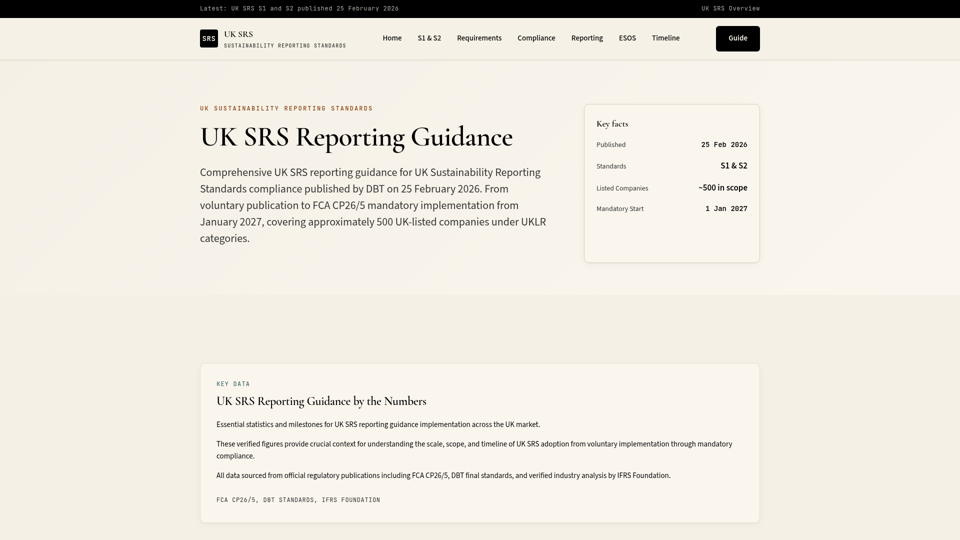
UK SRS implementation guidance covering standards, deadlines, and compliance requirements for UK Sustainability Reporting.
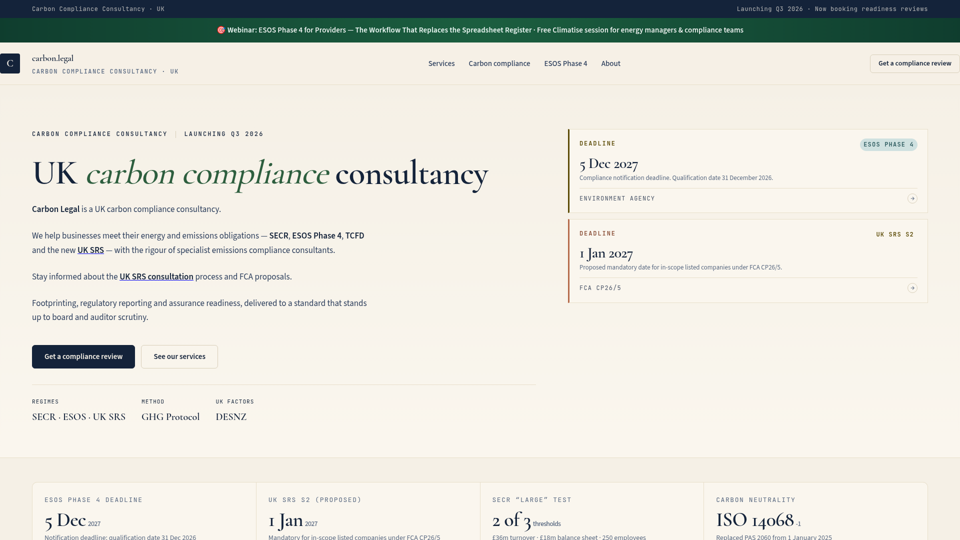
Carbon Legal is a UK carbon compliance consultancy. Specialist emissions compliance consultants for SECR, ESOS Phase 4, TCFD and UK SRS — footprinting, reporting and assurance readiness. Launching Q3 2026.

Key person insurance protects your UK business from losing essential staff. Compare keyman insurance options, costs & providers. Life cover, critical illness & shareholder protection from £20/month.
Seamless screen trade and financial transactions with AI powered tools to identify risk in your supply chain. Cost-effective SaaS tools available worldwide.
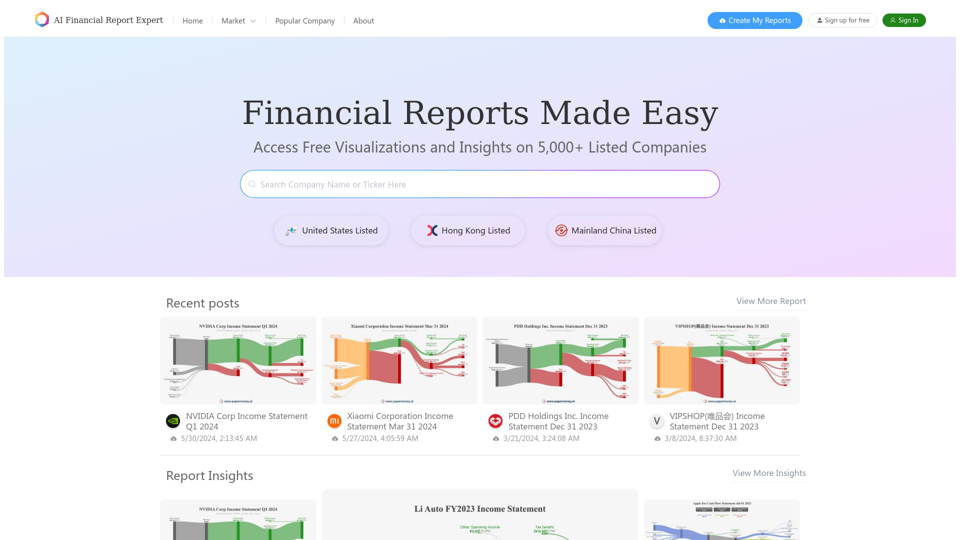
Access over 5,000 companies' earnings data for free and create your own visualizations to compare and analyze financial reports easily with Papermoney.
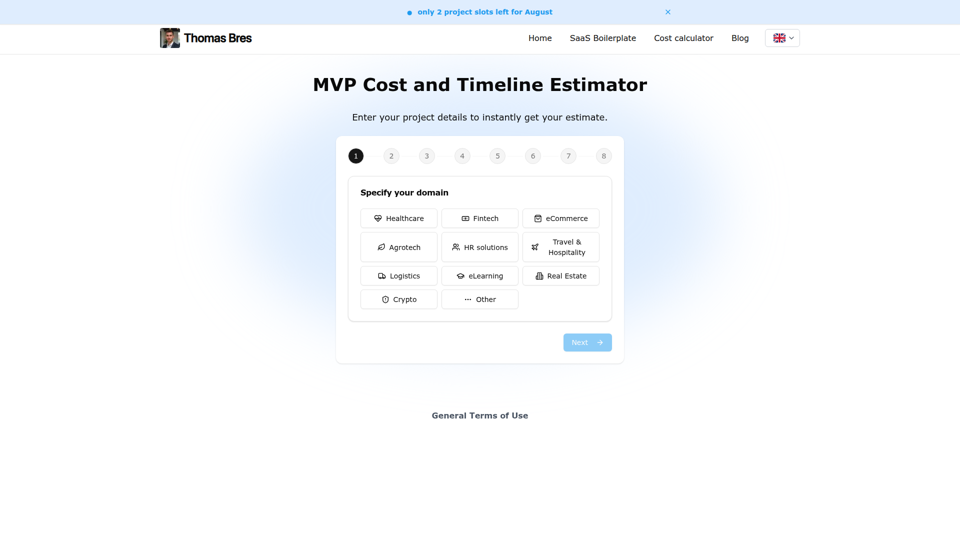
Free tool to estimate the cost and timeline for your SaaS MVP development.