Multi
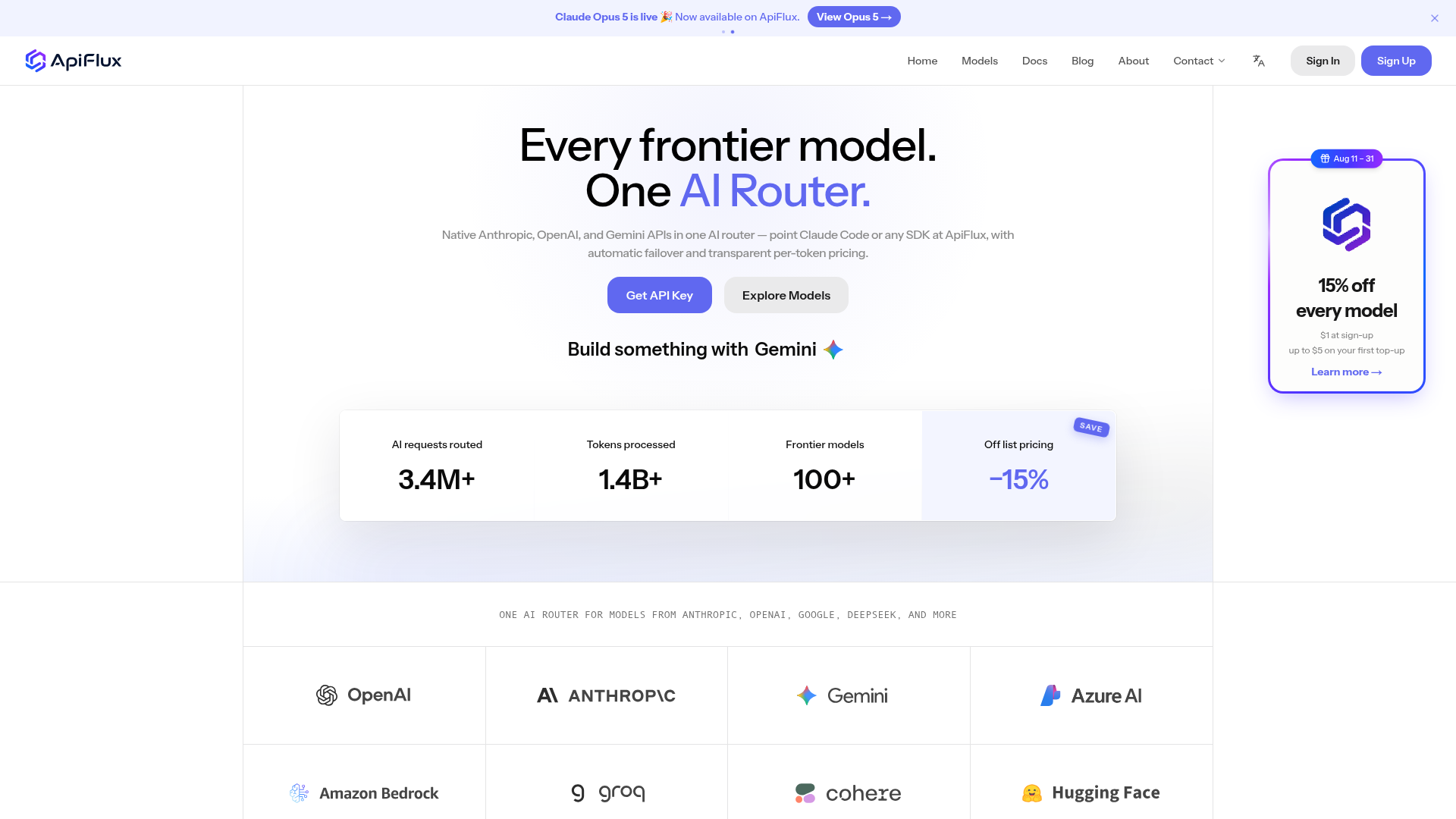
ApiFlux is an AI router with native Anthropic, OpenAI & Gemini APIs — one key for 100+ models, automatic failover, transparent per-token pricing. Claude Code ready.
What is ApiFlux?
ApiFlux is an AI router that provides a single, unified gateway to over 100 frontier large language models (LLMs). It acts as a bridge between your application and major AI providers like Anthropic (Claude), OpenAI (GPT), Google (Gemini), DeepSeek, and many more. Instead of managing multiple API keys and integrations, developers can point their applications to ApiFlux using a single, OpenAI-compatible API key. The platform intelligently routes requests, offers automatic failover during provider issues, and provides transparent, per-token pricing that is typically 15% below the official list prices from model makers. It's designed to simplify AI integration, reduce costs, and eliminate vendor lock-in for developers building with cutting-edge AI.
What is the main feature of ApiFlux?
1. Unified AI Gateway: A single OpenAI-compatible API endpoint grants access to over 100 models from all major AI providers, including the latest releases like Claude Opus 5. 2. Transparent, Cost-Effective Pricing: All models are offered at 85% of the official list price with clear, per-token billing. You see the exact cost of every request. 3. Automatic Failover & Reliability: The AI router monitors the health of all connected providers and automatically reroutes traffic to healthy models if one experiences degradation or an outage, ensuring high availability for your applications. 4. Seamless Developer Experience: Works natively with popular AI coding tools (Claude Code, Cursor, etc.) and any OpenAI SDK—just change the base URL to ApiFlux's endpoint. No code rewrites are required. 5. Comprehensive Live Dashboard: Gain real-time insights into token usage, request latency, costs, and error rates for every model call, providing full observability without extra instrumentation.
How to use ApiFlux?
Using ApiFlux is a straightforward three-step process designed for developers:
1. Create Your API Key: Sign up on the ApiFlux platform, top up your account balance, and obtain a single, universal API key.
2. Point Your Application: Configure your AI application or coding agent (like Claude Code, Cursor, or any tool using an OpenAI SDK) to use ApiFlux as its endpoint. This typically involves setting the base URL to https://api.apiflux.ai/v1 while keeping your existing code structure.
3. Start Making Calls: Begin sending requests. Your calls will be routed through ApiFlux to the model of your choice (e.g., claude-3-opus-20240229 or gpt-4o). You can monitor all usage, costs, and performance in the live dashboard.
How much does ApiFlux cost?
ApiFlux operates on a transparent, pay-as-you-go, per-token pricing model. There are no monthly subscriptions or hidden fees. Crucially, ApiFlux offers all models at ### 85% of the official provider's list price. For example, if a model costs $10.00 per million tokens directly from the provider, ApiFlux charges $8.50. You only pay for the tokens you consume across any of the 100+ supported models, with all charges drawn from a single, pre-topped-up balance. This makes it significantly cheaper than managing multiple direct provider accounts.
Helpful Tips for Maximizing ApiFlux
- Leverage Automatic Failover
- Design your application logic to trust ApiFlux's routing. If you specify a primary model and it becomes unhealthy, the router will automatically switch to a pre-configured fallback, maximizing uptime.
- Use the Dashboard for Evaluation
- When choosing a model for a new task, use the dashboard to run comparative tests. You can easily send the same prompt to Claude, GPT, and Gemini to compare performance, cost, and speed before committing.
- Optimize for Cost and Latency
- The dashboard provides detailed metrics. Use it to identify which models offer the best balance of quality, token cost, and response latency for your specific use cases (e.g., Gemini Flash for high-speed, low-cost tasks, Claude Opus for complex reasoning).
- Ideal for AI Coding Tools
- If you use AI-powered IDEs like Claude Code or Cursor, integrating ApiFlux is one of the fastest ways to reduce your token spending while gaining access to a broader model selection.
- Start Small
- Top up a small amount (a few dollars) to prototype and test different models and workflows without any long-term commitment, as there is no mandatory subscription.
Frequently Asked Questions
What is an AI router?
An AI router is a service that sits between your application and multiple AI model providers. It manages API calls, routing them to the appropriate backend (like OpenAI or Anthropic), handling authentication, load balancing, failover, and providing a unified interface and billing system.
How do I get started?
Getting started is quick: 1) Sign up at apiflux.ai and create an API key. 2) Add credit to your balance. 3) Change the base URL in your application's code or AI tool settings to point to ApiFlux. Detailed guides are available in the documentation.
Is ApiFlux compatible with the OpenAI SDK?
Yes, absolutely. ApiFlux provides a fully OpenAI-compatible API endpoint. This means you can use any library, SDK, or tool built for the OpenAI API (like the official openai Python package) by simply changing the base_url configuration. Your existing code for making chat completions or other calls will work without modification.
Why is it cheaper than going direct?
ApiFlux purchases tokens in bulk from providers and passes the volume savings on to customers. The platform operates efficiently, allowing it to offer all models at a consistent 15% discount off the standard list prices.
Which models are supported?
ApiFlux supports over 100 frontier models, including the entire Claude family (Haiku, Sonnet, Opus), GPT models (GPT-4o, GPT-4 Turbo), Google's Gemini family (Flash, Pro), DeepSeek, Qwen, Kimi, and models from Cohere, Mistral, and others through aggregators like Azure and Amazon Bedrock.
How does billing work?
You pre-top-up your ApiFlux account with credit. You are then billed per token consumed for each AI request, with rates displayed upfront. All your usage across every model draws from this single balance. There is no recurring subscription.
What happens when a provider goes down?
ApiFlux's automatic failover system detects provider health issues in real-time. If your primary model becomes unavailable or slow, the router will instantly reroute your request to a healthy fallback model you've specified, ensuring your application's users experience minimal disruption.
Multi
ApiFlux is an AI router with native Anthropic, OpenAI & Gemini APIs — one key for 100+ models, automatic failover, transparent per-token pricing. Claude Code ready.
 Cloudflare
 HTTP/3
 Next.js
 Node.js
 React
React Webpack
Free AI anime and manga generator. Turn text into anime episodes, manga, comics, webtoons and comic shorts in any art style — no drawing or animation skills needed.
Translate image text across 70+ languages with our advanced AI Image Translator to help you better expand your products globally to various countries
Advertised Here
Reach thousands of visitors daily. Get your spot now!
Tools similar to Multi
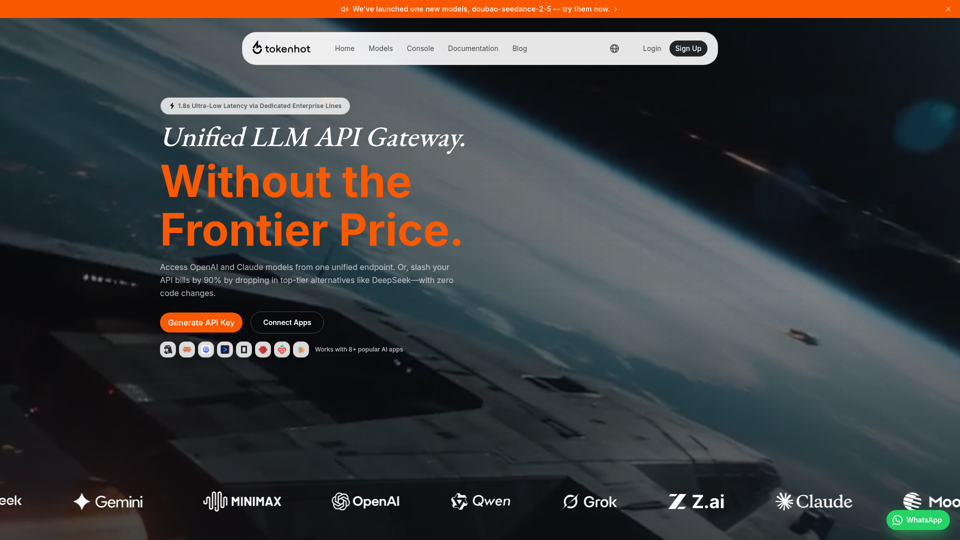
Better price, better stability. The unified LLM API gateway supporting OpenAI, Claude, Gemini, DeepSeek and 30+ providers.
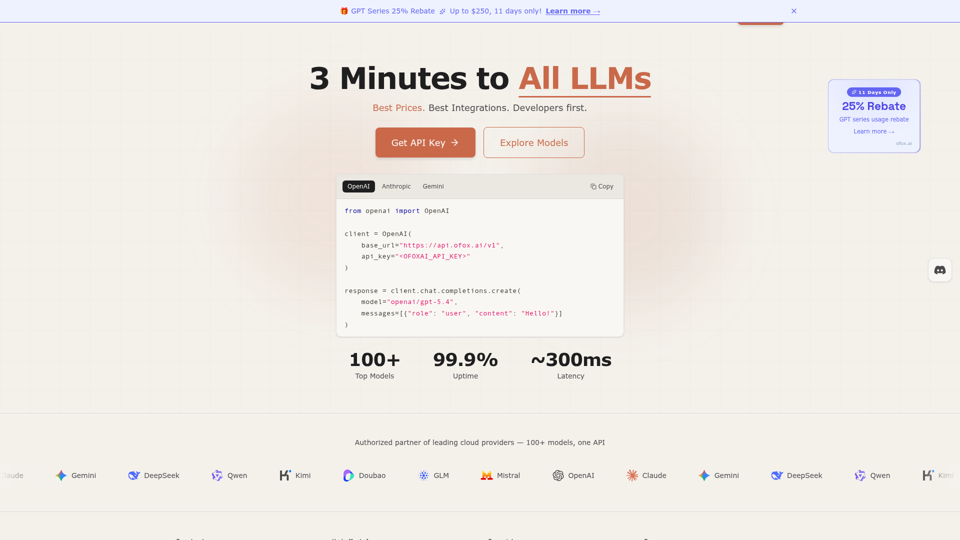
Unified LLM API gateway — access GPT-5.4, Claude Opus 4.6, Gemini 3.1, DeepSeek V3.2 and 100+ models through one API. OpenAI-compatible, 3-minute setup, pay-as-you-go. Low latency, 99.9% SLA. Built for developers who ship.
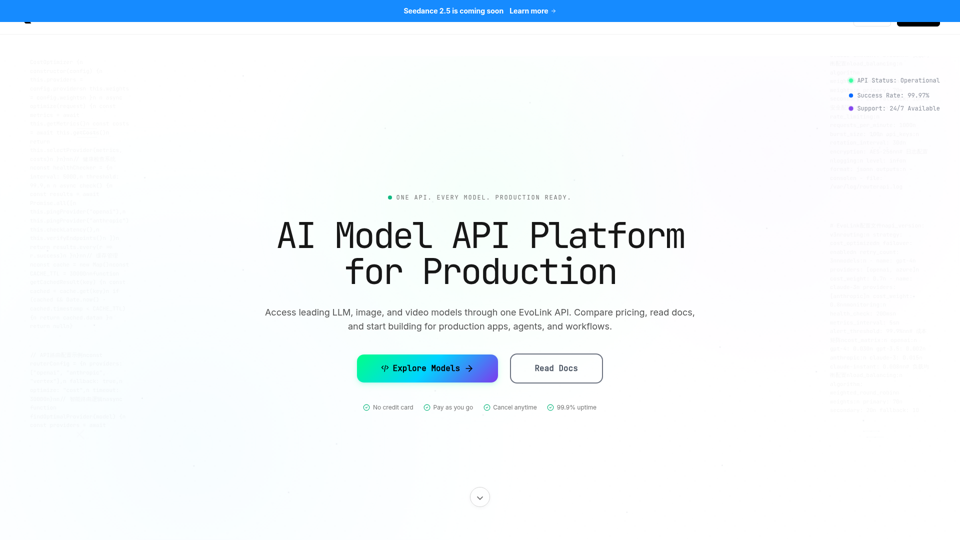
Access GPT, Claude, Gemini, Seedance, Kling & more via one EvoLink API. Get production-ready, cost-efficient access across LLM, image, and video models.
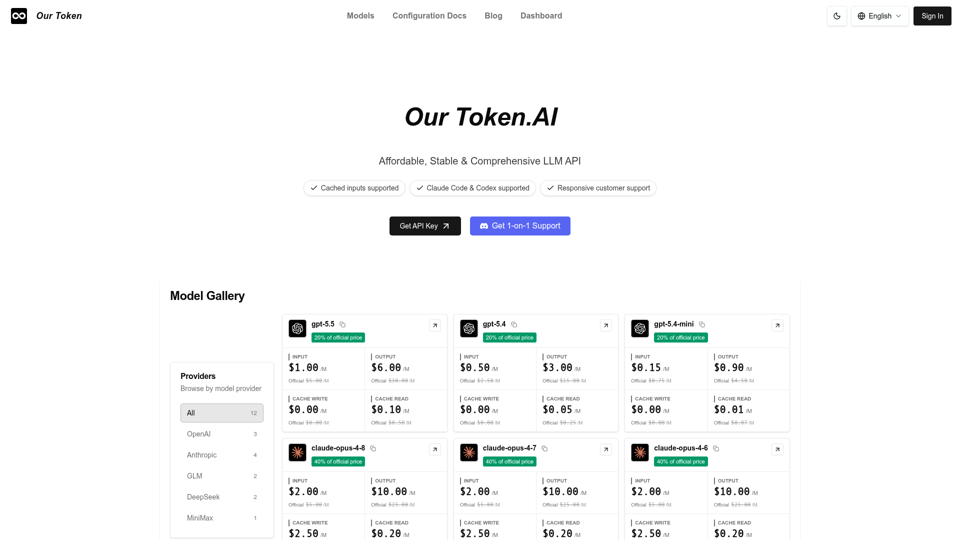
Use one unified API to access OpenAI, Claude, GLM, MiniMax and other LLMs. Compare models, prices, and capabilities to find the best fit for your prompts.
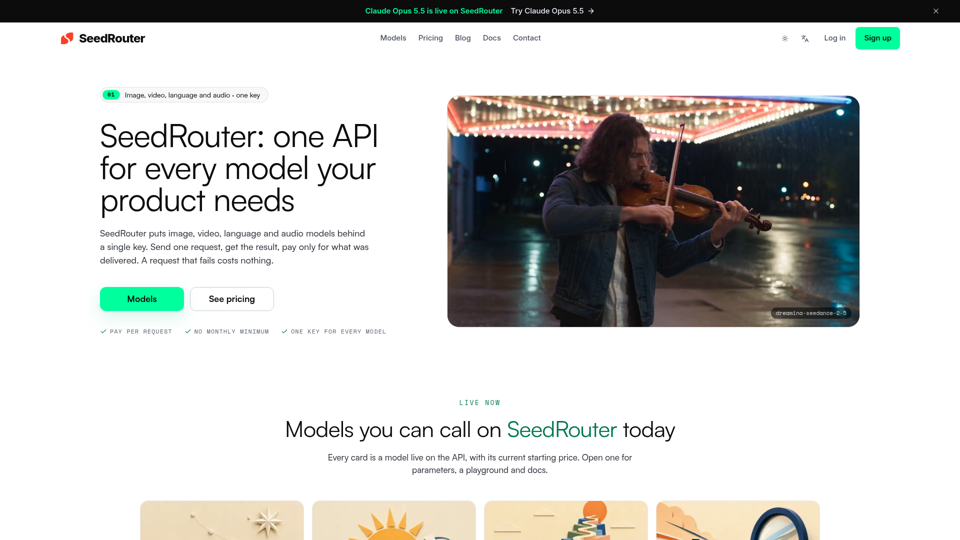
SeedRouter puts image, video, language and audio models behind one API key with pay-per-request billing. Failed requests cost nothing. Get your key.
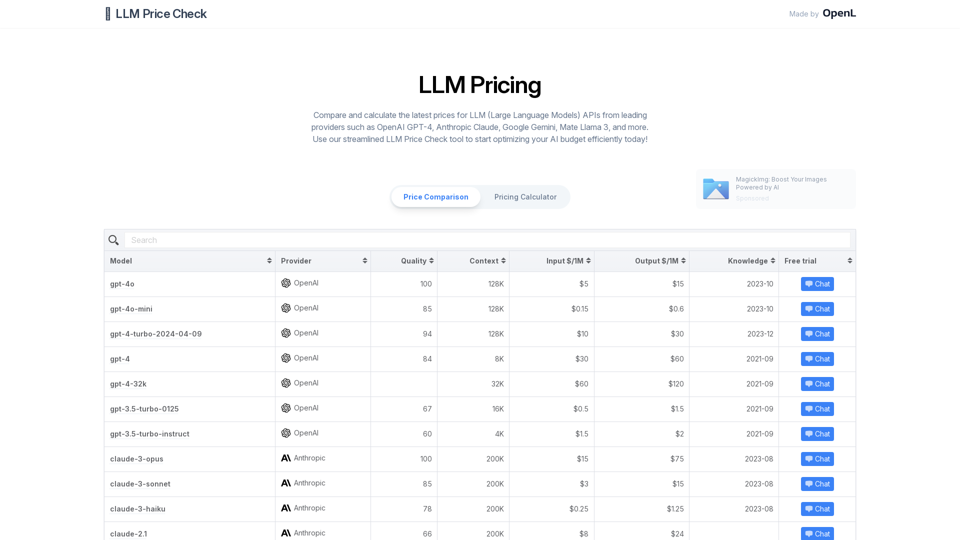
Explore cost-effective LLM API solutions with LLM Price Check. Instantly compare updated prices from major providers like OpenAI, AWS, and Google. Maximize your savings on LLM APIs starting today!
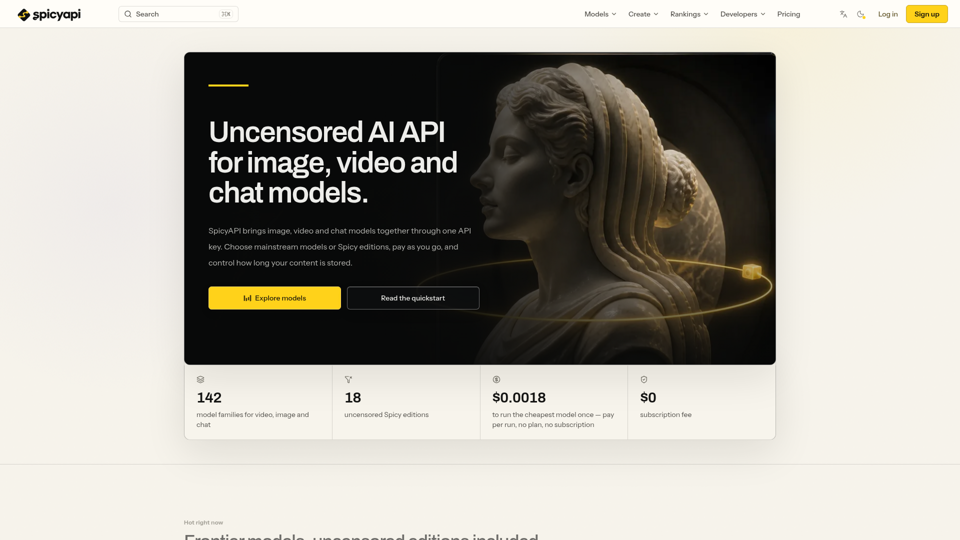
Uncensored AI API for image, video and chat. Access Seedance, Wan, MiniMax and more with one key, pay-as-you-go pricing and adjustable content retention.
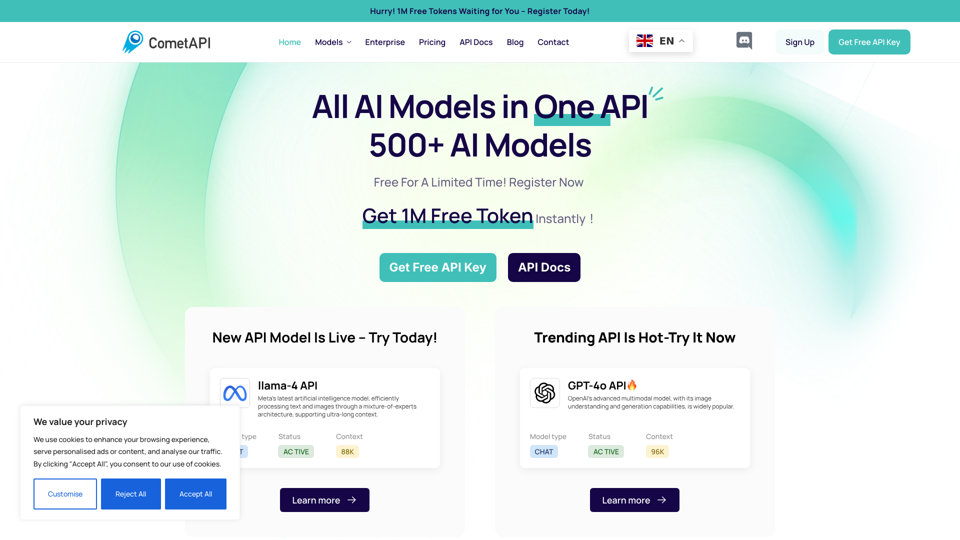
CometAPI simplifies AI integration, offering fast, reliable, and affordable API solutions to power innovative applications.