SeedRouter
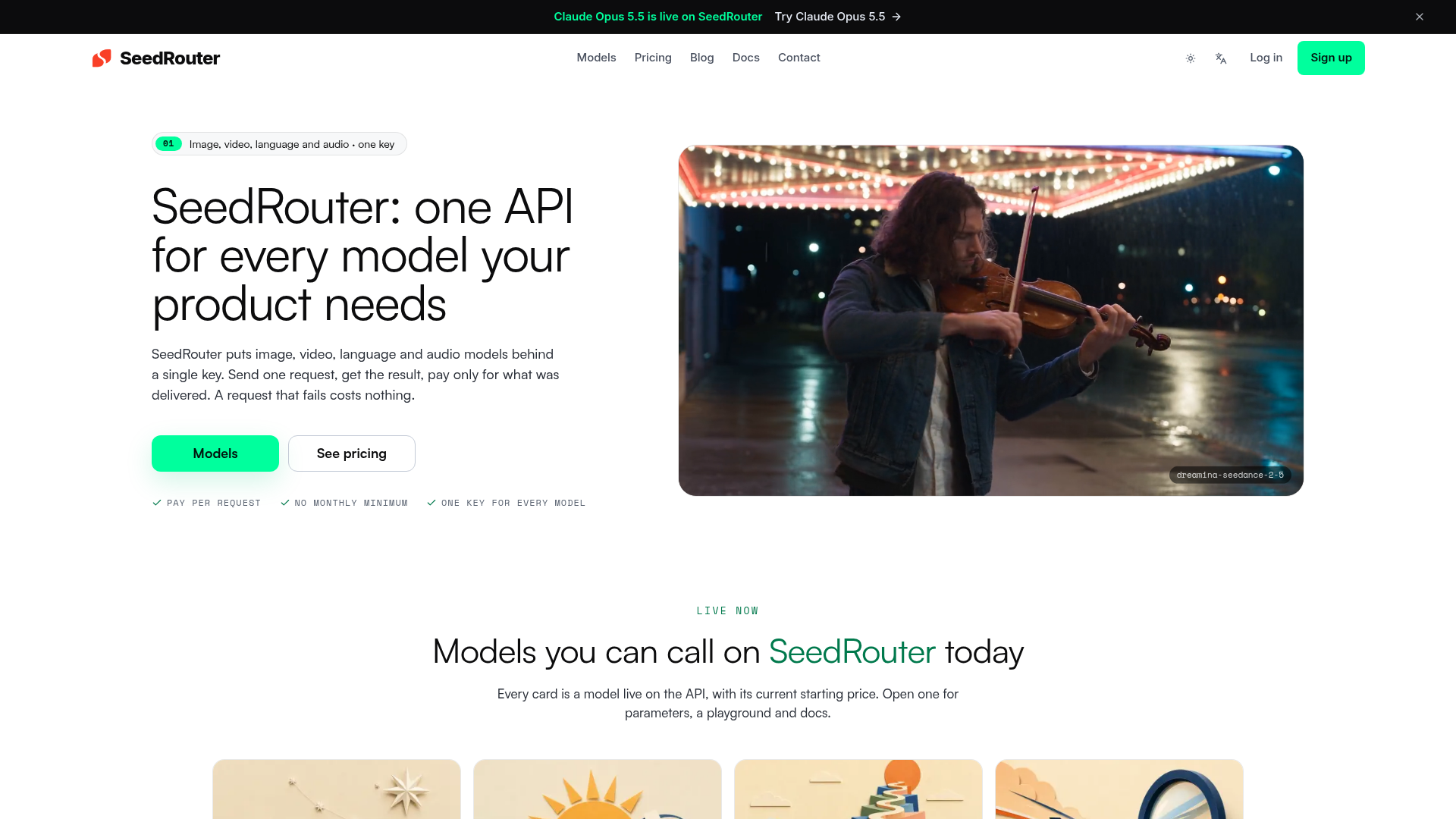
SeedRouter puts image, video, language and audio models behind one API key with pay-per-request billing. Failed requests cost nothing. Get your key.
What is SeedRouter?
SeedRouter is a unified API platform that provides developers and businesses with access to a diverse range of cutting-edge AI models through a single, simplified interface. It acts as a gateway, aggregating top-tier models from leading AI providers—including OpenAI, Anthropic (Claude), Google (Gemini), ByteDance, DeepSeek, and others—across multiple modalities such as text generation, image creation, video synthesis, and audio production. Instead of managing separate integrations, keys, and billing for each provider, SeedRouter consolidates them behind one API key, allowing you to send a request, receive a result, and pay only for what is successfully delivered. A request that fails costs you nothing, making it a transparent and production-ready solution for integrating AI into applications.
What are the main features of SeedRouter?
SeedRouter is designed to streamline the integration and use of powerful AI models with several key features:
1. Unified API for Multiple AI Modalities
SeedRouter provides a single API endpoint for accessing models across four primary categories: AI video generation (like ByteDance's Seedance family), AI image generation (including GPT Image and Google's Nano Banana models), Large Language Models (LLMs) for chat and reasoning (such as GPT-6, Claude Opus, and DeepSeek), and AI audio/music generation. This eliminates the complexity of juggling different SDKs and authentication systems.
2. Transparent, Pay-Per-Use Pricing
The platform operates on a clear, usage-based model. You see the exact cost per request for each model (e.g., $0.00425 per image for GPT Image 2, $3.20 per 1 million input tokens for Claude Opus 5.5, $0.1170 per second for Seedance 2.5 video) before you make a call. There are no monthly minimums or hidden fees. Crucially, you are only billed when a job is successfully completed; failed requests incur no cost.
3. Production-Ready Infrastructure
SeedRouter is built for reliability and scale in real-world applications. It handles asynchronous jobs for longer tasks (like video generation) by providing a task ID that you can poll for status or receive via webhook upon completion. Outputs are delivered via CDN links. The platform ensures consistent API behavior, making it suitable for products that need to stay operational.
4. Simplified Model Switching and Flexibility
The API maintains a consistent request shape across different model families (e.g., OpenAI, Anthropic, Google). This allows developers to easily switch between models—from GPT to Claude, or from an image model to a video model—without rewriting their core integration code, offering great adaptability as project needs evolve.
5. Centralized Dashboard and Control
A unified dashboard gives you full visibility and control. You can manage API keys, track real-time usage and costs across all models, view the price of every individual request, and top up your balance in USD, all from one place.
How to use SeedRouter?
Integrating SeedRouter into your product is a straightforward process designed for developers:
- Get an API Key: Sign up on the SeedRouter platform and generate your unique API key. This single key will grant you access to all available models.
- Explore and Choose Models: Browse the SeedRouter model directory to explore available AI models for video, image, text, and audio. Each model page details its capabilities, parameters, a live playground for testing, documentation, and its precise, up-to-date pricing.
- Make API Calls: Use the provided API endpoints with your key. For language models, SeedRouter offers an OpenAI-compatible endpoint, meaning you can often use existing OpenAI SDKs by simply changing the base URL. For other modalities, you'll use SeedRouter's specific endpoints (e.g.,
/v1/images/generationsfor images,/v1/videos/generationsfor videos). - Handle Responses: For immediate tasks (like many image or text generations), you'll receive the result directly in the API response. For asynchronous jobs (like video generation), the API will return a
task_id. You can then poll the/v1/tasks/{task_id}endpoint for status or configure a webhook to be notified automatically when the output is ready and available on a CDN. - Monitor and Manage: Use the SeedRouter dashboard to monitor your usage, track spending per model, and manage your account settings.
Price
SeedRouter employs a transparent, pay-per-request pricing model with no monthly commitments. You are billed only for successful deliveries. Here are examples of starting prices for some featured models (prices are live and subject to change; always check the pricing page for the most current rates):
- Text/LLM Models
- Claude Opus 5.5: From $3.20 per 1 million input tokens.
- GPT-6 Sol: From $1.60 per 1 million input tokens.
- DeepSeek V4.1 Flash: From $0.24 per 1 million input tokens.
- Image Generation Models
- GPT Image 2: From $0.00425 per image.
- Nano Banana 2 (Gemini 3.1 Flash Image): From $0.03 per image.
- Nano Banana 2 Lite: From ~$0.02565 per image.
- Video Generation Models
- Seedance 2.5: From $0.1170 per second of generated video.
- Seedance 2.0: From $0.0800 per second.
- Seedance 2.0 Mini: From $0.0182 per second.
You can view the complete and detailed pricing for every model directly on its page in the model directory.
Helpful Tips
- Start with the Playground
- Before writing any code, use the interactive playground available on each model's page to experiment with prompts, parameters, and see the quality of outputs. This helps you choose the right model for your use case.
- Plan for Asynchronous Jobs
- For video generation and potentially long image tasks, design your application flow to handle asynchronous responses using the provided
task_idand polling/webhook mechanisms, rather than expecting instant results. - Leverage Consistent APIs
- The uniformity of the API across model families is a major advantage. Structure your code to easily swap the
modelparameter in your requests, allowing you to benchmark different providers or upgrade models with minimal refactoring. - Monitor Costs in the Dashboard
- Keep an eye on the dashboard to understand your consumption patterns. The per-request cost breakdown can help you optimize prompts and choose cost-effective models for different tasks within your application.
- Understand Failure Policies
- Since failed requests are not charged, implement robust error handling and retry logic in your integration. If a request fails, you can safely retry it or switch to an alternative model using the same API key.
Frequently Asked Questions
What happens if my API request fails?
If a request to SeedRouter fails, you are not charged for it. You can retry the request or choose a different model. The platform is designed so that you only pay for successfully delivered outputs.
Do I need different API keys for different model providers (OpenAI, Claude, etc.)?
No. The core value of SeedRouter is providing a single API key that works across all integrated model providers and families. You manage one key for everything.
Can I use existing OpenAI SDKs with SeedRouter?
Yes, for language models (LLMs), SeedRouter provides an OpenAI-compatible endpoint. This means you can often use popular OpenAI SDKs by simply configuring them to point to SeedRouter's base URL and using your SeedRouter API key.
How do I receive the output for a video generation job?
Video generation is an asynchronous process. When you submit a job, you receive a task_id. You can periodically poll the /v1/tasks/{task_id} endpoint to check its status (queued, processing, succeeded). Once succeeded, the response will contain a CDN URL where your generated video is available for download. You can also set up a webhook to receive a notification automatically when the job is complete.
Is there a free tier or trial?
SeedRouter's pricing is primarily pay-per-use. Some models or promotions might offer limited free trials or credits, which would be indicated on the model's specific page or through platform announcements. The best way to check is to visit the pricing page and the individual model pages for the most accurate and current information.
How does billing work?
You add funds (in USD) to your SeedRouter account balance. As you make successful API calls, the cost of each request is deducted from this balance in real-time. You can view a detailed history of all requests and their associated costs in your dashboard.
SeedRouter
SeedRouter puts image, video, language and audio models behind one API key with pay-per-request billing. Failed requests cost nothing. Get your key.
 Cloudflare
 HTTP/3
 Next.js
 Node.js
 React
React Webpack
Free AI anime and manga generator. Turn text into anime episodes, manga, comics, webtoons and comic shorts in any art style — no drawing or animation skills needed.
Translate image text across 70+ languages with our advanced AI Image Translator to help you better expand your products globally to various countries
Advertised Here
Reach thousands of visitors daily. Get your spot now!
Tools similar to SeedRouter
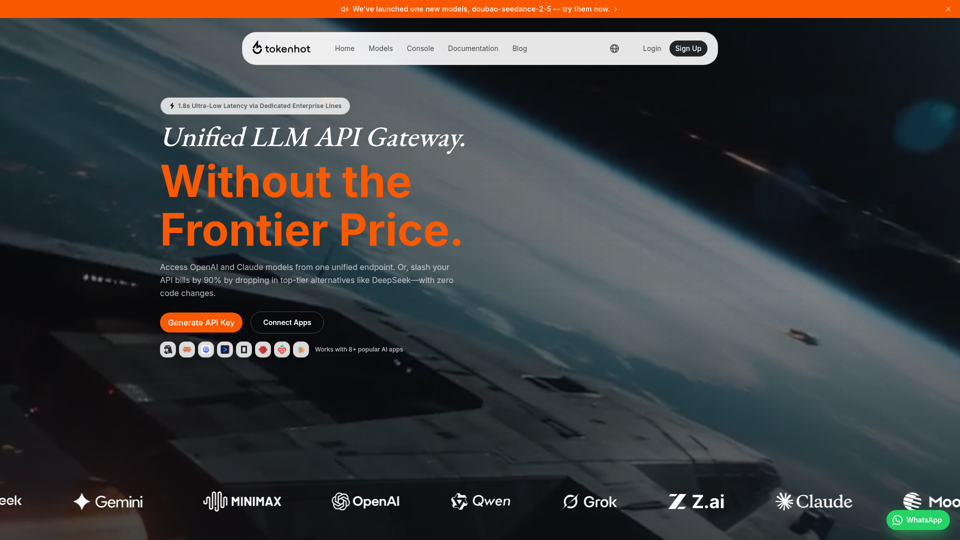
Better price, better stability. The unified LLM API gateway supporting OpenAI, Claude, Gemini, DeepSeek and 30+ providers.
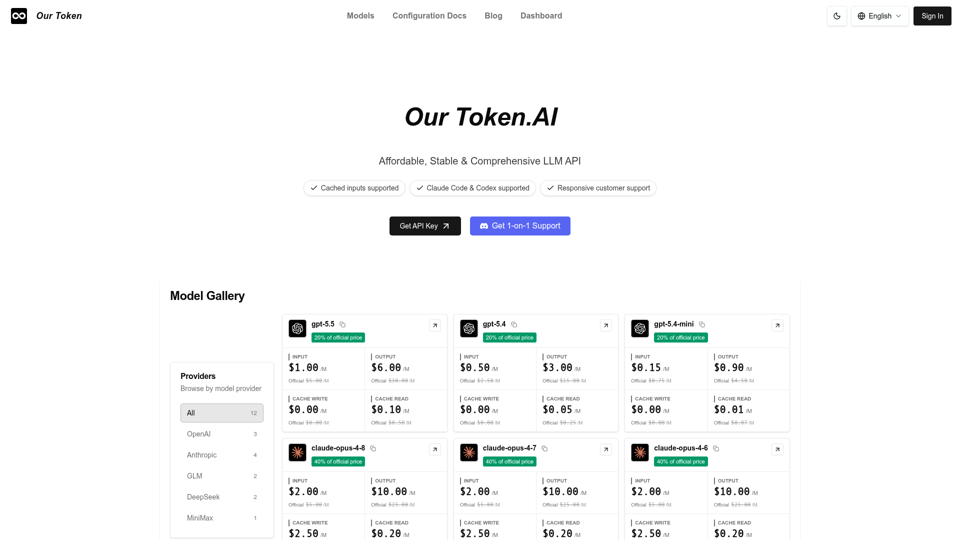
Use one unified API to access OpenAI, Claude, GLM, MiniMax and other LLMs. Compare models, prices, and capabilities to find the best fit for your prompts.
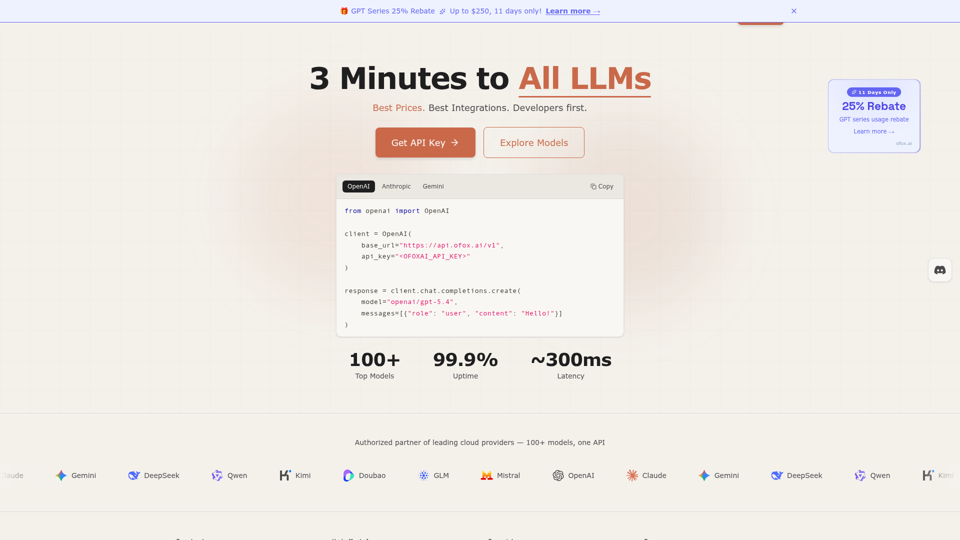
Unified LLM API gateway — access GPT-5.4, Claude Opus 4.6, Gemini 3.1, DeepSeek V3.2 and 100+ models through one API. OpenAI-compatible, 3-minute setup, pay-as-you-go. Low latency, 99.9% SLA. Built for developers who ship.
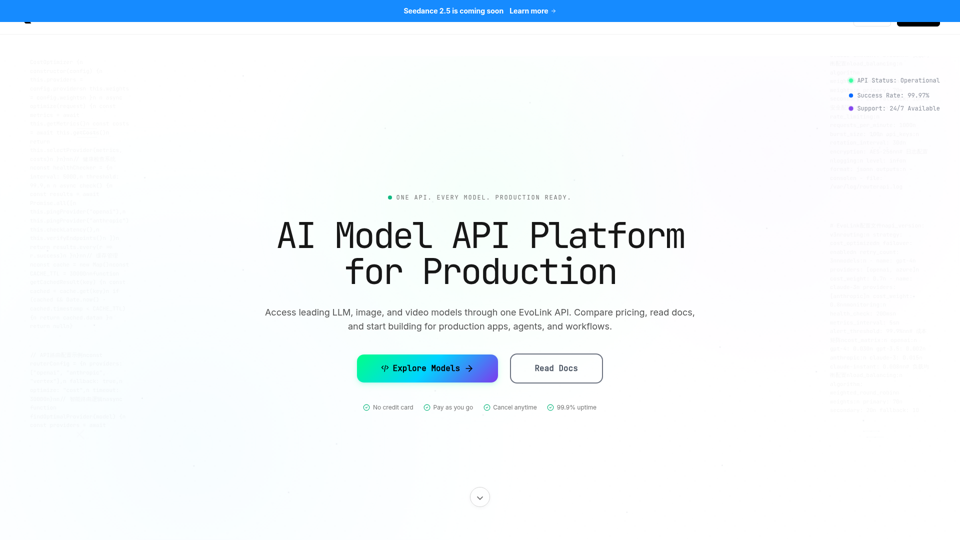
Access GPT, Claude, Gemini, Seedance, Kling & more via one EvoLink API. Get production-ready, cost-efficient access across LLM, image, and video models.
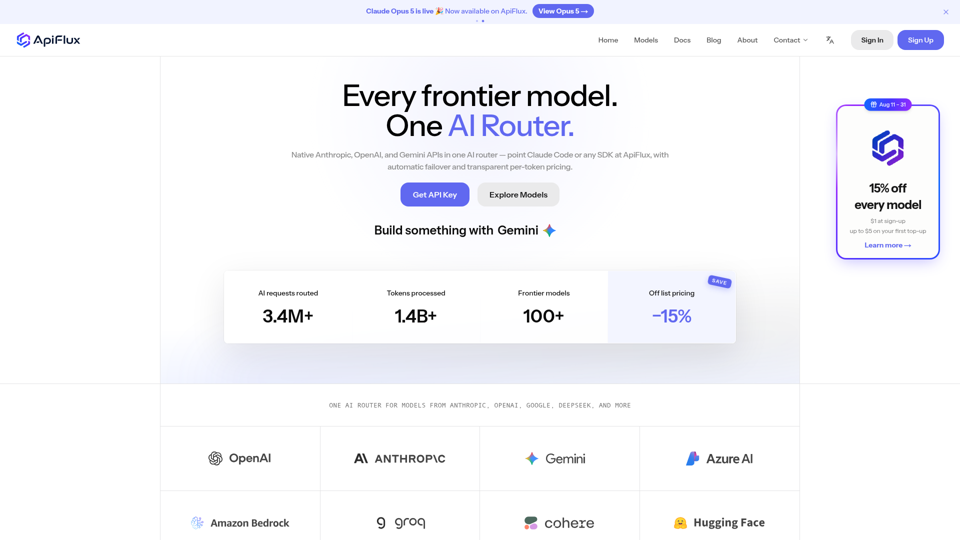
ApiFlux is an AI router with native Anthropic, OpenAI & Gemini APIs — one key for 100+ models, automatic failover, transparent per-token pricing. Claude Code ready.
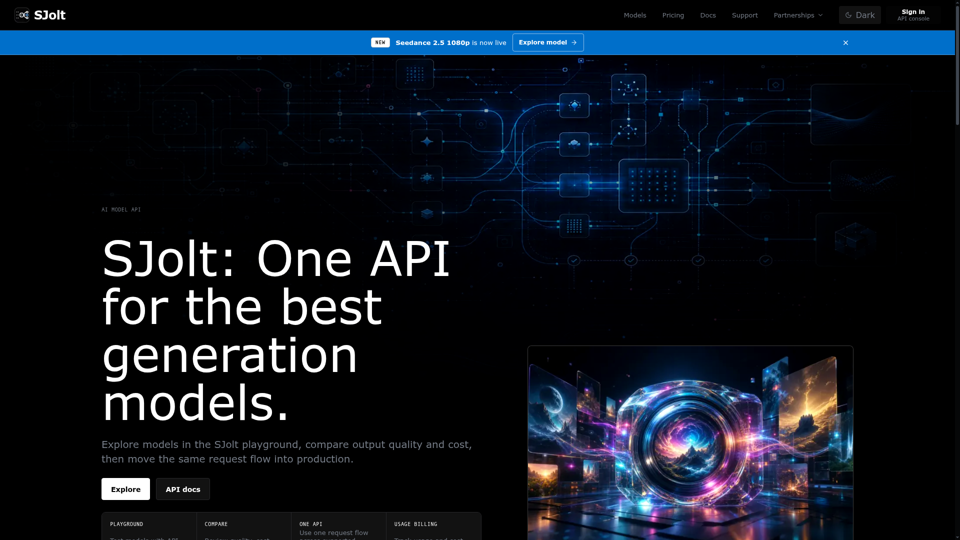
Explore image, video, and audio generation models in the SJolt playground, compare output quality and cost, then copy the same API request into production.
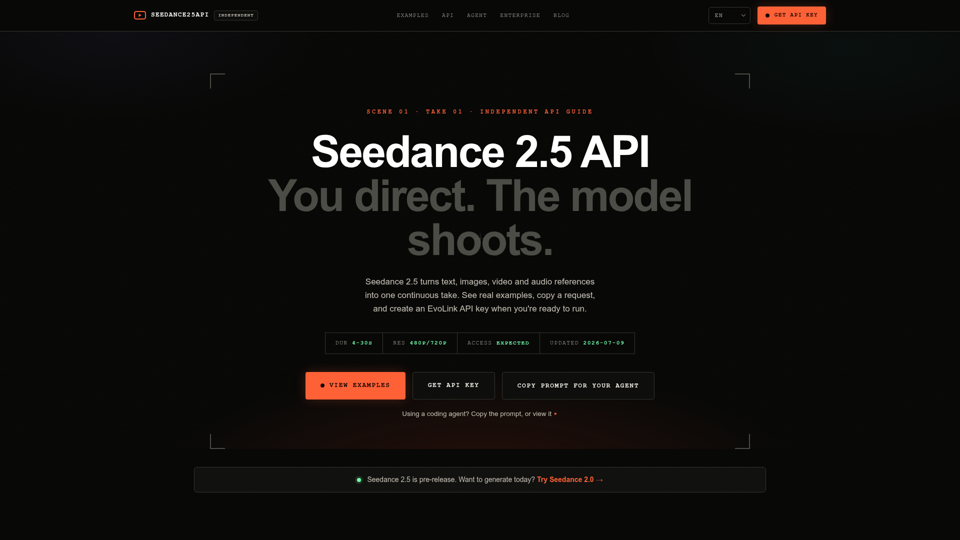
Use Seedance 2.5 API with a practical guide for developers and agents: current access status, billing model, request builder, real code examples, and API key handoff.
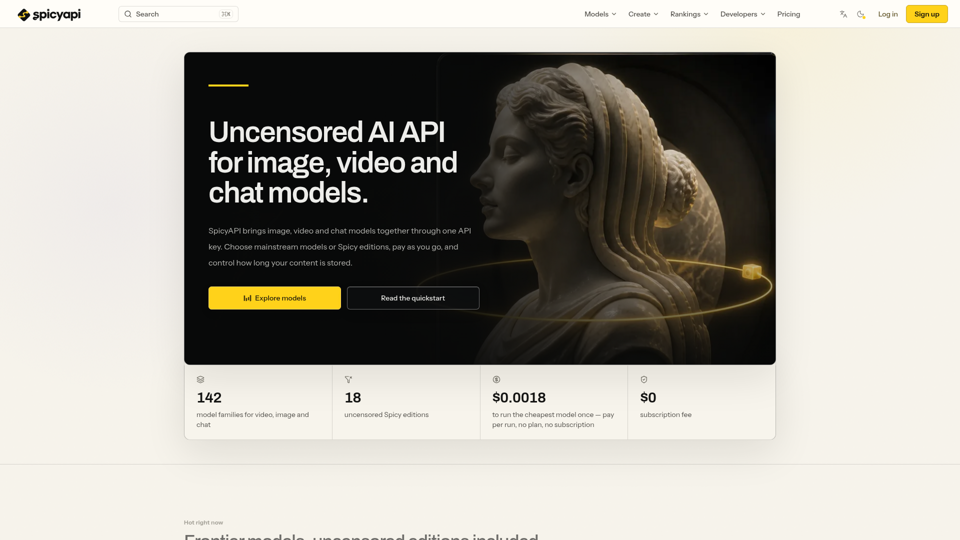
Uncensored AI API for image, video and chat. Access Seedance, Wan, MiniMax and more with one key, pay-as-you-go pricing and adjustable content retention.